Flooring

Laminate, SPC and engineered oak flooring in Dublin, Meath and Louth

We lay laminate, SPC and engineered oak, straight or in herringbone and chevron, and we tile floors. Our own team lifts the old floor, levels what is underneath, lays the new one and fits the skirting and trims. One team from bare subfloor to the last threshold strip.

Chevron engineered oak cut to the curve of a stone hearth at a kitchen island
Chevron engineered oak, cut to the curve of the stone. Co. Kildare
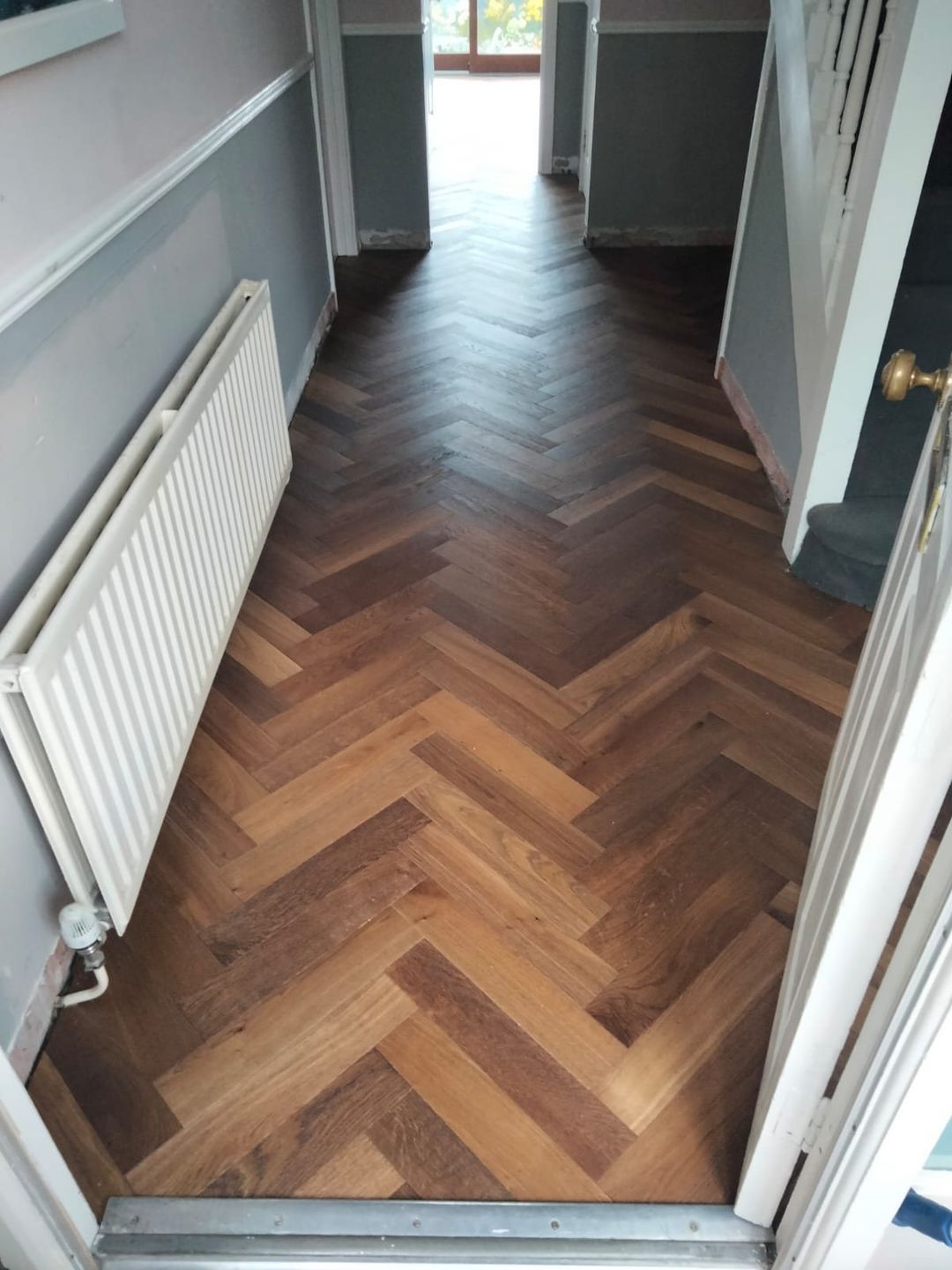
Herringbone engineered oak in a hall in Dublin
Herringbone engineered oak, hall. Dublin
Herringbone engineered oak running to the garden doors
Herringbone engineered oak to the garden doors. Dublin
Chevron engineered oak framed around a fireplace
Chevron engineered oak, framed around the fireplace. Co. Kildare
Laminate through a hall and bedroom doorway
Laminate, hall and bedrooms. Gorey, Co. Wexford
Wood-effect porcelain floor tiles in a bright room
Wood-effect porcelain tiles. Drogheda, Co. Louth
Marble-effect porcelain tiles around a kitchen island
Marble-effect porcelain around the island. Navan, Co. Meath

What we lay

Laminate, straight-laid or in herringbone

SPC rigid vinyl, with a waterproof core for kitchens, halls and utility rooms

Engineered oak: straight boards, herringbone and chevron

Floor tiles: large-format porcelain, Victorian-pattern, patterned and mosaic

Stair cladding: carpeted stairs turned into laminate treads with risers in MDF faced with HPL

Subfloor preparation: lifting old floors and levelling uneven ones

Skirting boards, threshold strips and brass trims

Before and after

The same stairs, halls and rooms, photographed before we started and when we handed them back.

BeforeStraight flight of stairs covered in worn brown carpet
Carpeted stairs, before. Portmarnock, Co. Dublin
AfterThe same stairs clad in laminate treads with white risers
Laminate treads, risers in MDF faced with HPL. Portmarnock, Co. Dublin
BeforeWinder stairs covered in brown carpet
Winders, before
AfterThe same winder stairs clad in laminate treads with white risers
Every winder tread cut to its own shape
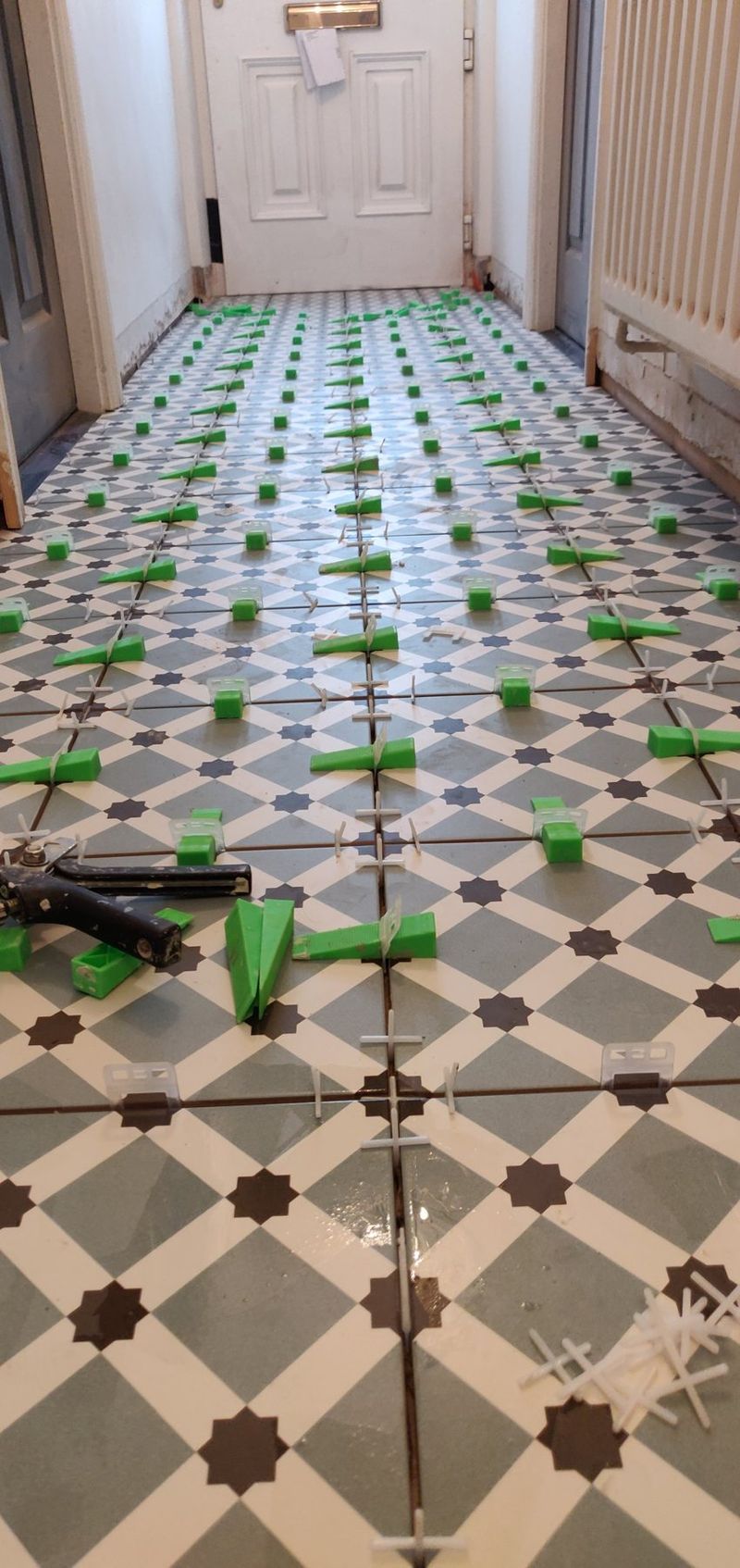
DuringPatterned porcelain hall tiles going down with levelling clips
Patterned tiles going down. Co. Kildare
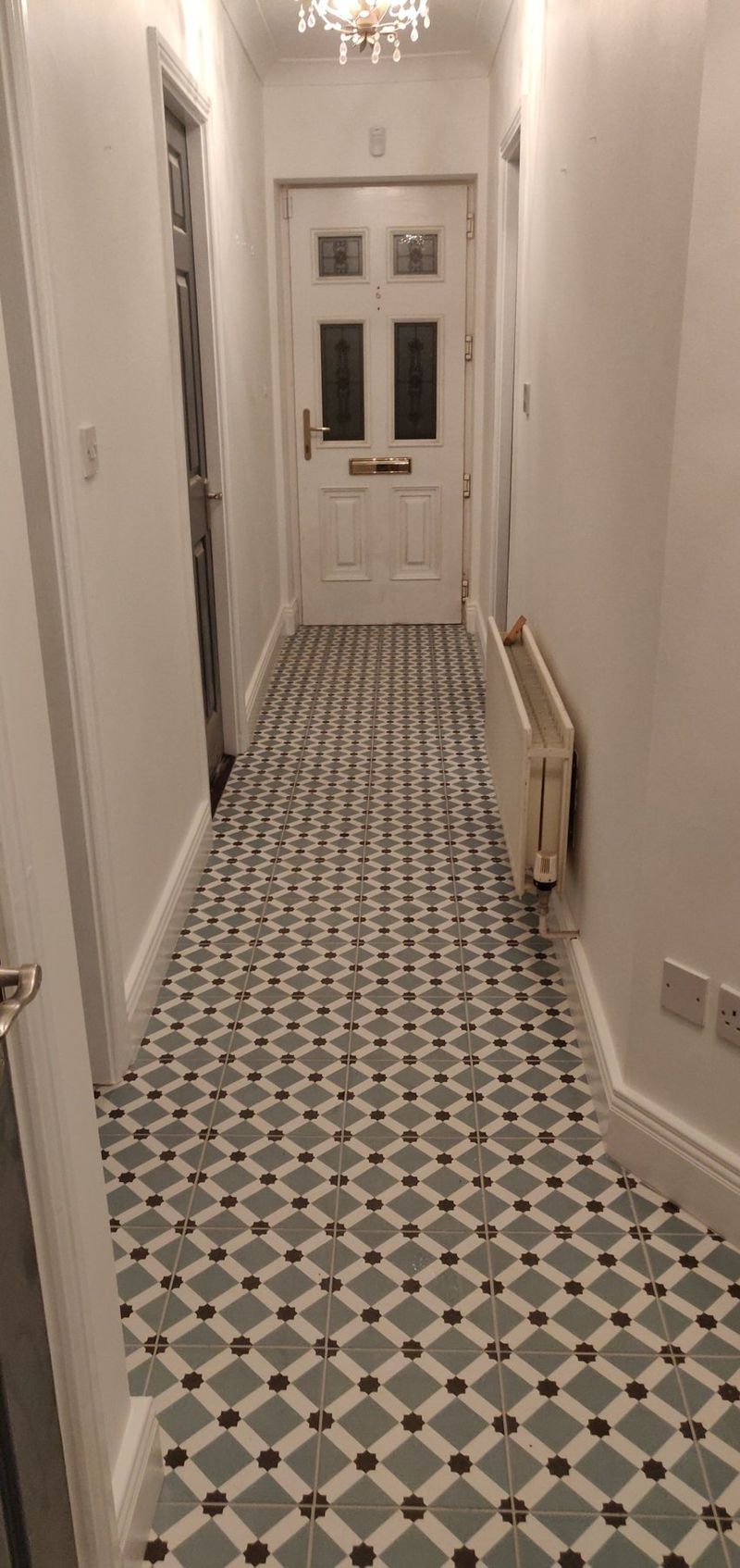
AfterThe same hall finished in patterned porcelain tiles
The finished hall
DuringSPC flooring being laid along a kitchen wall
SPC going down. Dublin
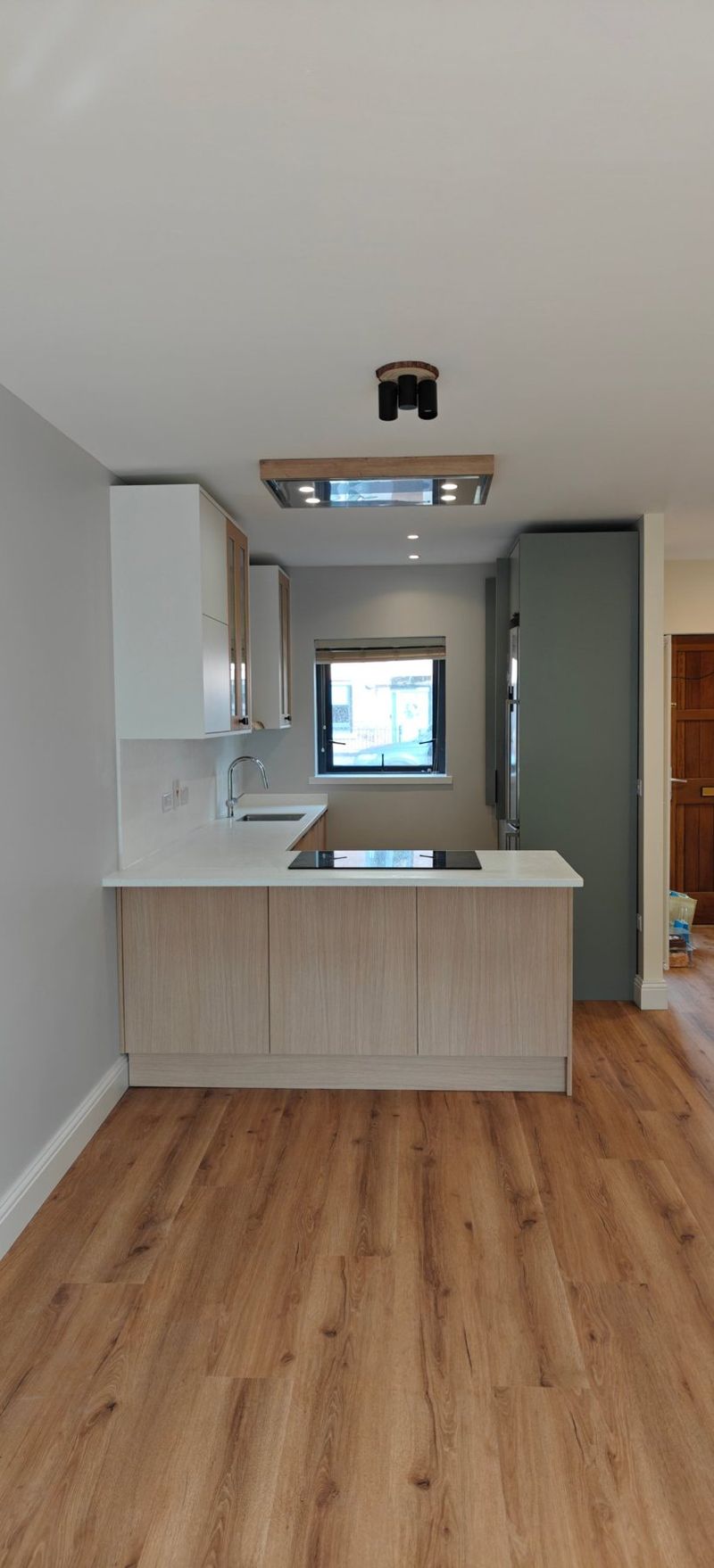
AfterFinished SPC floor in front of the new kitchen
The finished kitchen floor

Preparing the subfloor

A new floor is only as flat as what is under it. The old floor comes up, the base is levelled or primed, and only then does the new floor go down.

Concrete subfloor primed and ready for floor tiles
Subfloor primed and ready for tiles. Drogheda, Co. Louth
Self-levelling compound being rolled across a room
Self-levelling compound, rolled out so the base is flat. Dublin
Laminate boards going down over underlay
Laminate going down over underlay. Drogheda, Co. Louth

Laying floor tiles

Porcelain floor tiles are heavy, rigid and unforgiving: a high edge or a crooked joint stays there for good. Every cut is marked before it is made, and every tile is set with spacers and levelling clips.

Stone-effect porcelain tiles in a kitchen
Stone-effect porcelain, kitchen. Drogheda, Co. Louth
Wood-effect porcelain tiles cut tight around a timber step
Wood-effect porcelain cut tight around a timber step. Drogheda, Co. Louth
Wood-effect porcelain tiles going down with levelling clips
Levelling clips keep every tile flush with the next. Drogheda, Co. Louth
Cut lines marked in red on a marble-effect porcelain tile
Every cut marked out on the tile first. Navan, Co. Meath
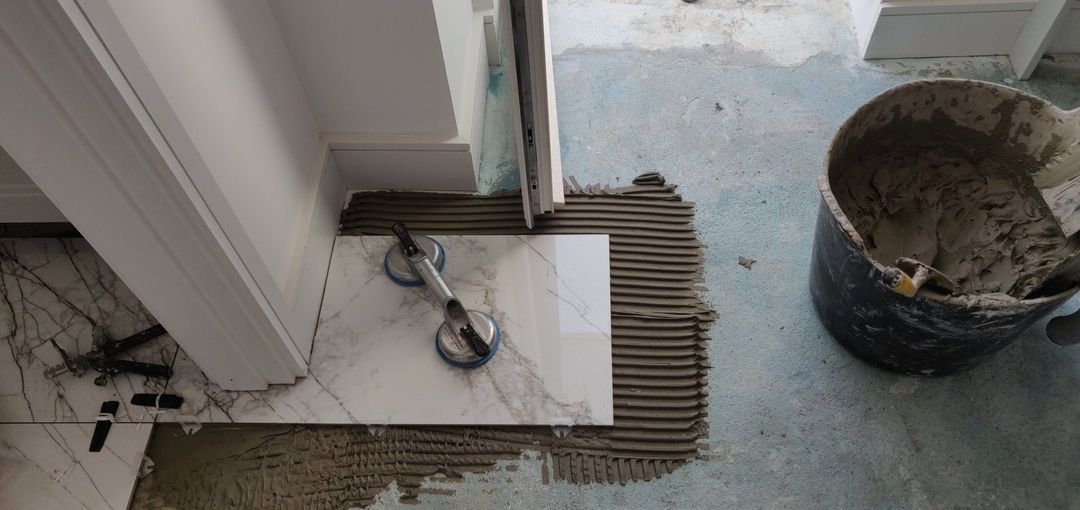
Large marble-effect porcelain tile set at a door frame
Large-format tile set tight to the door frame. Navan, Co. Meath
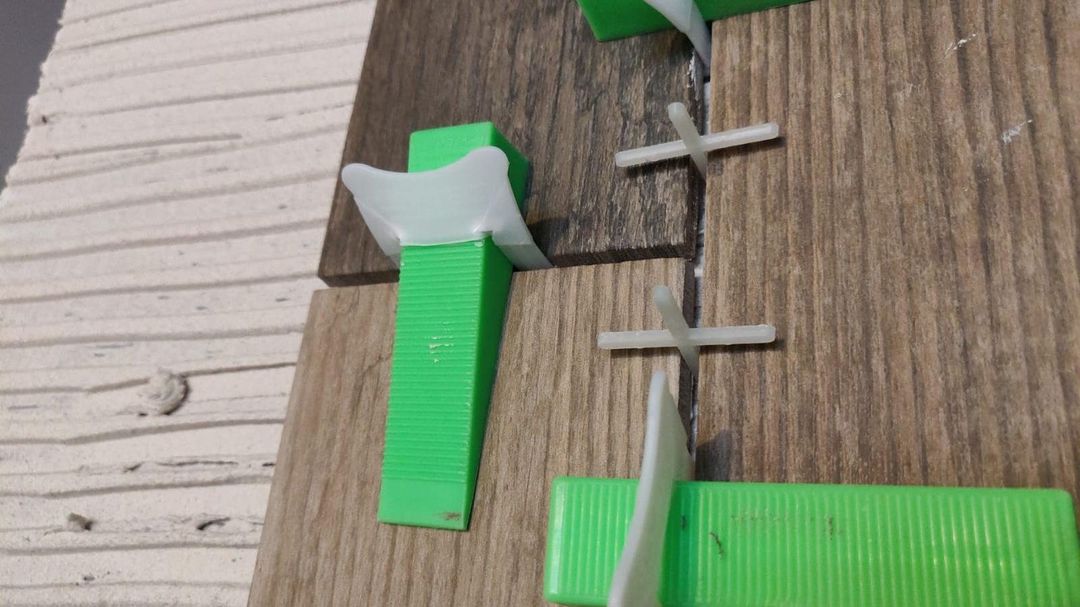
Close-up of notched tile adhesive, cross spacers and levelling clips on wood-effect tiles
Three things in one shot: notched adhesive on the left, cross spacers for even joints, and levelling clips that keep the edges flush. Drogheda, Co. Louth

Finishing details

A floor is judged at its edges: where it meets the skirting, a fireplace, a stone floor or the next room. That is where we spend the time.

Boards scribed tight to fireplaces, curved walls and stone

Brass trim strips where wood meets stone or tile

Threshold and transition strips between rooms and floor types

Skirting boards fitted once the floor is down

Engineered oak cut to follow a curved stone edge
Oak cut to follow a curved stone edge. Co. Kildare
Chevron engineered oak meeting stone at a kitchen island with a brass trim
Chevron oak meets stone at the island, finished with a brass trim. Co. Kildare
Threshold strip between straight laminate and herringbone laminate
Threshold strip between straight and herringbone laminate. Gorey, Co. Wexford
Threshold strip between laminate and floor tiles at a doorway
Laminate to tile, with a threshold strip. Gorey, Co. Wexford

How it works

1. Look and measure. We visit, check what is under the existing floor and measure every room.

2. Quote. A clear written quote: what is included and what is not.

3. Preparation. The old floor comes up and the subfloor is levelled where it needs it.

4. Laying. Done by our own team, not passed on.

5. Finishing and handover. Skirting, trims and thresholds, then we walk you through the finished floor.

Selected work

Case study: engineered oak glued down through a Sandyford show house →Case study: a derelict shop turned into charity offices in four weeks, laminate floors included, Navan →Case study: a garden studio rebuilt from a new floor up, Co. Kildare →Case study: a damp rental bungalow rebuilt, floors levelled before anything went down, Drogheda →Floor tiling as part of a bathroom renovation →All transformations →

Based in Drogheda, working across Dublin, Wicklow, Meath, Louth and Kildare.

Questions we get asked

Laminate or SPC: which should I choose?

SPC has a rigid, waterproof core, so it suits kitchens, utility rooms and halls where water and wet shoes are part of daily life. Laminate comes in more finishes, including herringbone, but it should not go where water can sit on it. We tell you which one fits each room.

Do you lay solid wood parquet?

No. We lay engineered oak: a real oak top layer on a stable core, which copes with central heating and Irish humidity far better than solid boards. Herringbone and chevron are both available in engineered oak.

Do you sand or refinish existing wooden floors?

No, we don't do sanding or lacquering. We lay new floors.

Is the floor glued down or floating?

Laminate and SPC float on an underlay. Engineered oak can float or be glued to the subfloor. In a Sandyford show house we glued every board to the screed, so the floor feels solid underfoot, without the hollow sound.

My floor is uneven. Can you still lay on it?

Not as it is. We level it first, with self-levelling compound where needed. A new floor laid on an uneven base moves, opens at the joints and sounds hollow.

Where do you work?

We are based in Drogheda and work across Dublin, Wicklow, Meath, Louth and Kildare.

Imagination.
Conversation.
Transformation.

NIXTOM consultationLet's talk.